Let's talk about your smile!
It is our commitment to active listening, ensuring your comfort and vision drive every step of your dental journey.
Do you frequently wake up with a dull, throbbing headache? Does your jaw click, pop, or feel stiff when you chew or yawn? Chronic jaw, neck, and facial pain are often signs of a Temporomandibular Joint Disorder (TMD). Living with jaw dysfunction can affect your sleep, your diet, and your overall quality of life. At Federal Way Dental Excellence, our specialized team provides comprehensive diagnostics and conservative, highly effective treatments to relieve your pain and restore harmony to your bite. Supported by our in-house dental lab, we deliver rapid, custom-fitted relief so you can comfortably enjoy smiling and eating again.
What are TMJ and TMD?
Your temporomandibular joints (TMJ) are the complex, sliding hinge joints located on either side of your face, just in front of your ears. They connect your lower jawbone to your skull and allow you to talk, chew, and swallow.
When these joints, or the muscles and ligaments surrounding them, become inflamed, misaligned, or damaged, it results in a Temporomandibular Disorder (TMD). This dysfunction can be caused by chronic teeth grinding (bruxism), a misaligned bite, arthritis, or direct trauma to the jaw.
Relieving TMJ discomfort requires pinpointing the biomechanical cause of your strain.
Guided by our Board-Certified Prosthodontist Dr. Michael Yeh, your dentist in Federal Way evaluates your joint mechanics, muscle tension, and bite alignment before designing a personalized, non-invasive treatment plan:
- Custom Night Guards & Occlusal Splints: For patients who clench or grind their teeth during sleep, we fabricate custom-fitted acrylic mouthguards. These appliances cushion your enamel, absorb heavy clenching forces, and gently hold your jaw in a relaxed, neutral resting position throughout the night.
- Bite Realignment: When your upper and lower teeth do not meet evenly, your jaw muscles must work overtime to compensate. Microscopic adjustments to specific chewing surfaces create a balanced bite and relieve strain on the joint.
- Restorative Bite Reconstruction: If severe long-term bruxism has already eroded or shortened your natural teeth, Dr. Yeh can utilize custom porcelain crowns, onlays, or bridges to rebuild your natural bite height and permanently restore proper joint support.
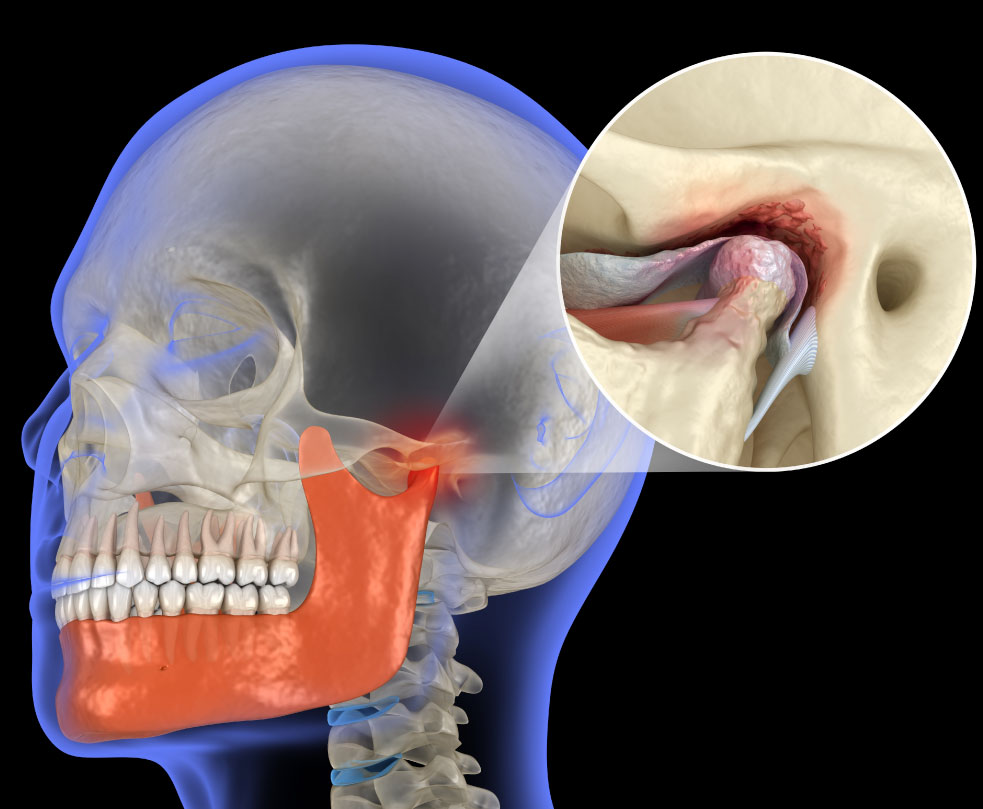
Common symptoms of TMJ disorders
- Persistent aching or sharp pain in the jaw, face, neck, or shoulders.
- Frequent morning headaches or migraines originating behind the eyes or temples.
- A distinct clicking, popping, or grating sound when opening or closing your mouth.
- Pain or fatigue while chewing tough, dense, or crunchy foods.
- Ringing in the ears (tinnitus) or unexplained earaches.
- Teeth that appear flattened, chipped, shortened, or abnormally worn down from grinding.
The advantage of specialist care & our in-house dental lab
Treating TMJ disorders effectively requires an appliance engineered with micron-level precision. At Federal Way Dental Excellence, we don't outsource your comfort to distant commercial facilities. Our on-site dental laboratory allows us to design and fabricate your custom night guards and therapeutic splints right here in our practice.
High-definition 3D digital impressions ensure your night guard fits your unique anatomy securely without feeling bulky or interfering with sleep.
Bypassing third-party shipping means you receive your custom splint significantly faster.
If your appliance feels slightly snug or your bite needs a minor tweak during your fitting, our master lab technicians make adjustments right on the spot.

Brian Z. said
"What an amazing place. Everything from the front desk secretaries, Nicole the dental assistant, and to Dr. Mike were all amazing people and very knowledgeable. I felt very comfortable and that every worry I had about my teeth were addressed. Wouldn’t want any other dentist caring for my dental health."

Emergency Dental Care in Federal Way
What to do during a severe TMJ flare-up or locked jaw
A severe TMJ episode can rapidly escalate into a distressing dental emergency. If you yawn or bite down and suddenly find your jaw locked open, stuck closed, or seized by intense muscle spasms, remain calm and avoid trying to force your jaw open or closed. Follow these steps to handle the situation safely:

Hold a warm, moist washcloth against the side of your face and jaw to relax muscle spasms and stimulate blood flow.

An anti-inflammatory medication (such as ibuprofen) can help reduce acute joint swelling and manage initial pain levels.

Avoid chewing gum or hard, chewy, or tough foods that put pressure on the inflamed joint.

We can safely assist in unlocking the joint, provide localized pain therapies, and implement immediate measures.
Frequently Asked Questions
Be in the know
The questions below cover essential details about Federal Way Dental Excellence, our specialist doctors, and practice policies. If you have questions regarding specific dental procedures, feel free to explore our dedicated service pages or contact our Federal Way team directly at (253) 838-1225.
Getting Started
A healthier, brighter smile is just one click away
We can't wait to welcome you. Schedule your free consultation today!